Resilience has always been an interest and passion of mine. I like understanding what supports humans adapting to challenges and experiencing growth through difficulty. Maybe some of it is my personal background as a veteran. Perhaps it’s my fascination with the human journey through life in a philosophical and mythological sense. Either way, there are some periods when it just feels like an especially salient subject. Like now.
Unfortunately, the word “resilience” is often relegated to individual perseverance or strength in common usage. We use it to mean individual traits like strength, often to the detriment of understanding its relational and social components. As a reaction to this, I often hear some voices downplay what makes each person resilient or just do away with the concept altogether. The reality is that true resilience is something far more nuanced and holistic. It involves individual traits, relationships, social systems and support, and takes place at every level: psychological, emotional, spiritual, and relational.
So, what is resilience? In a word: adaptability. Resilience Is our ability o adapt to stressors appropriately. Sometimes that does mean perseverance. At other times it means embracing change and being flexible. Sometimes it’s something we find in ourselves and other times, we find it in drawing on something broader than ourselves. I could, and have, teach entire classes on the subject. For the purposes of this post though, I want to highlight two.
Human Finiteness
One of the biggest challenges to our nervous systems and brains in the 21st century is the fact that we have biology that evolved to support us in dealing with our immediate circumstance and environment. They evolved to address threats like saber tooth tigers, where you know pretty quickly if you’ve managed to deal with the threat. Unfortunately that biology is driving technology that allows us to be exposed to much much more than threats in our immediate environment. Ones that we can’t can’t really do anything about.
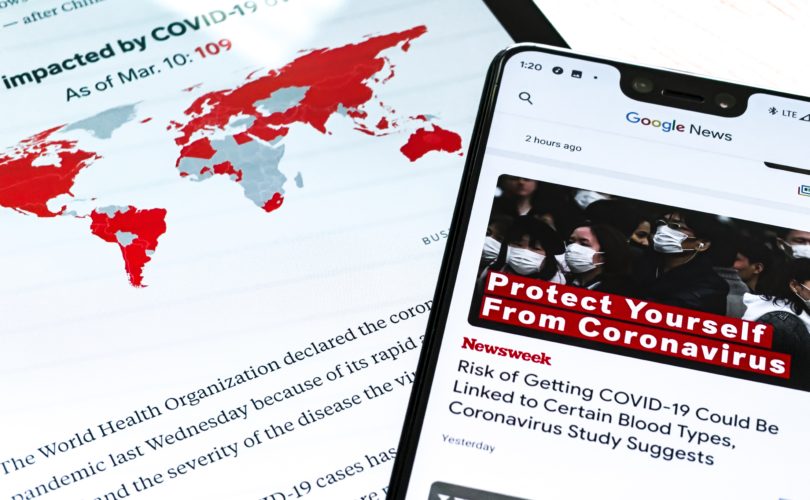
We can know about wars, famine, natural disasters, and other sources of trauma happening all over the world. That lizard brain amygdala and survival response part of our nervous system (the autonomic nervous system) can get “activated” by all the stressors and traumas we’re exposed to. What they can’t do, is complete that necessary fight or flight response and allow our bodies to feel “resolution” after the emergency.
A critical part to resilience is embracing our own finiteness. This means being present and mindful, consciously acknowledging our limits (and staying within them!), and taking control of our attention. For our cultural moment in particular, this last point is very important. We live at a time when attention is currency. Our phones and our algorithms vie for it constantly. Along with acknowledging, honoring, and communicating our limitations, it’s one of the most important things I would convey to someone in my therapy room in terms of individual resilience (more on that in a future post). The other component I would mention today is just how social resiliency s as well.
We weren’t meant to be resilient alone
I was first introduced to resilience and began studying and teaching it long before I became a therapist. While I was in the Army, I was a Master Resilience Trainer as well as an instructor at an Army leadership academy. During that time, I came across a very interesting piece of research.
While studying the impact of Army leadership on resilience and the incidence of PTSD among deployed soldiers, they looked at soldiers with high vs low combat exposure. The “high combat exposure” group saw active combat regularly. The “low combat exposure” group may have occasionally been near danger but was not directly involved in active fighting. They then assessed each group based on leadership, with questions like: “I trust my leaders have my best interest at heart” and “I can trust the people around me to take care of me”. Finally, they looked at the rates of PTSD in each of the four groups.
What they found was fascinating. The soldiers with low combat exposure and poor leadership actually had higher rates of PTSD than those with high combat exposure and good leadership. The social environment of the soldiers was more of a determining factor in whether or not soldiers developed PTSD than actual combat exposure.
Humans are pack animals. We need community to survive. Resilience is relationship just as much as it is a personal quality. In fact, when it comes to trauma and chronic stress, the research tells us that our social environment has an even greater impact than the traumatic events and stressors themselves.
How to Show Up in a Meaningful Way
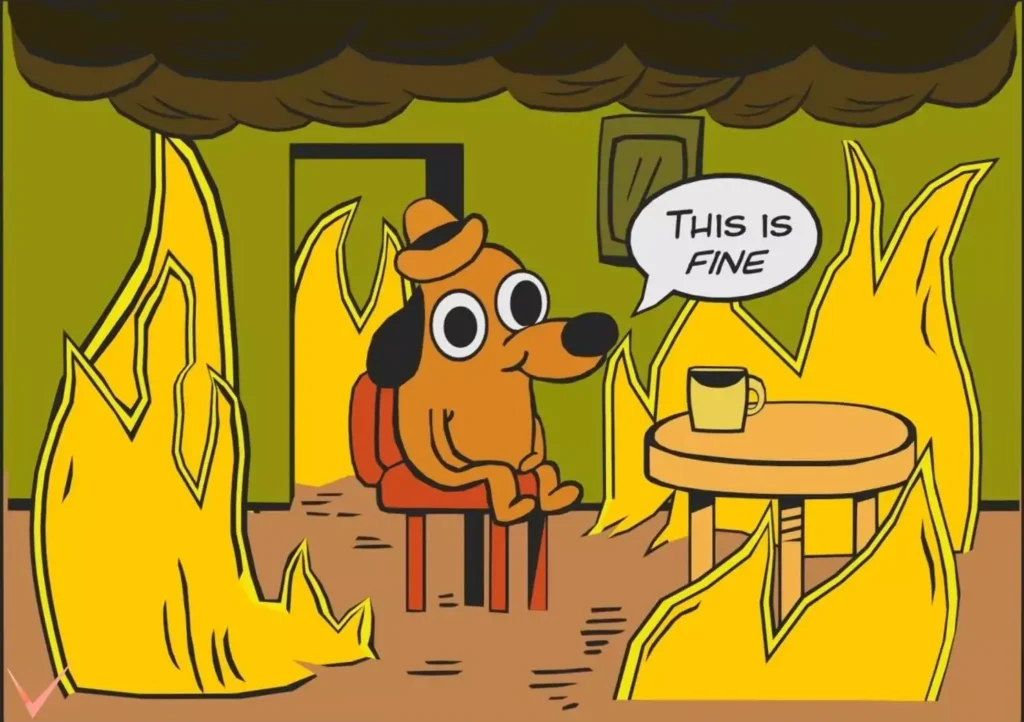
We’re living in some pretty stressful times. The economy is rough for most everyone (unless you happen to be a billionaire), we’re engaged in yet another war in the middle east, our country is arguably the most polarized it’s ever been, and every time we turn on the news or open our feed, there’s another reason to feel like the world is on fire. Again, resiliency is adaptability. Right now, two adaptations that could help us all are embracing our finiteness and tending to our social environment.